For Parents & Teachers

Stories that help children prepare for a changing world.

The Adventures of Monty is written for readers aged 8–12, but the stories read aloud beautifully for younger listeners too. Beneath the adventure sits a quiet curriculum — cultures, geography, friendship, values, and history — along with the deeper qualities children will need as the world changes around them.

If AI is going to give answers faster and faster, children need something even more lasting: curiosity, judgement, adaptability, empathy, and the confidence to ask good questions. Below you'll find discussion ideas, future-ready skills, themed modules, and printable resources for home or school.

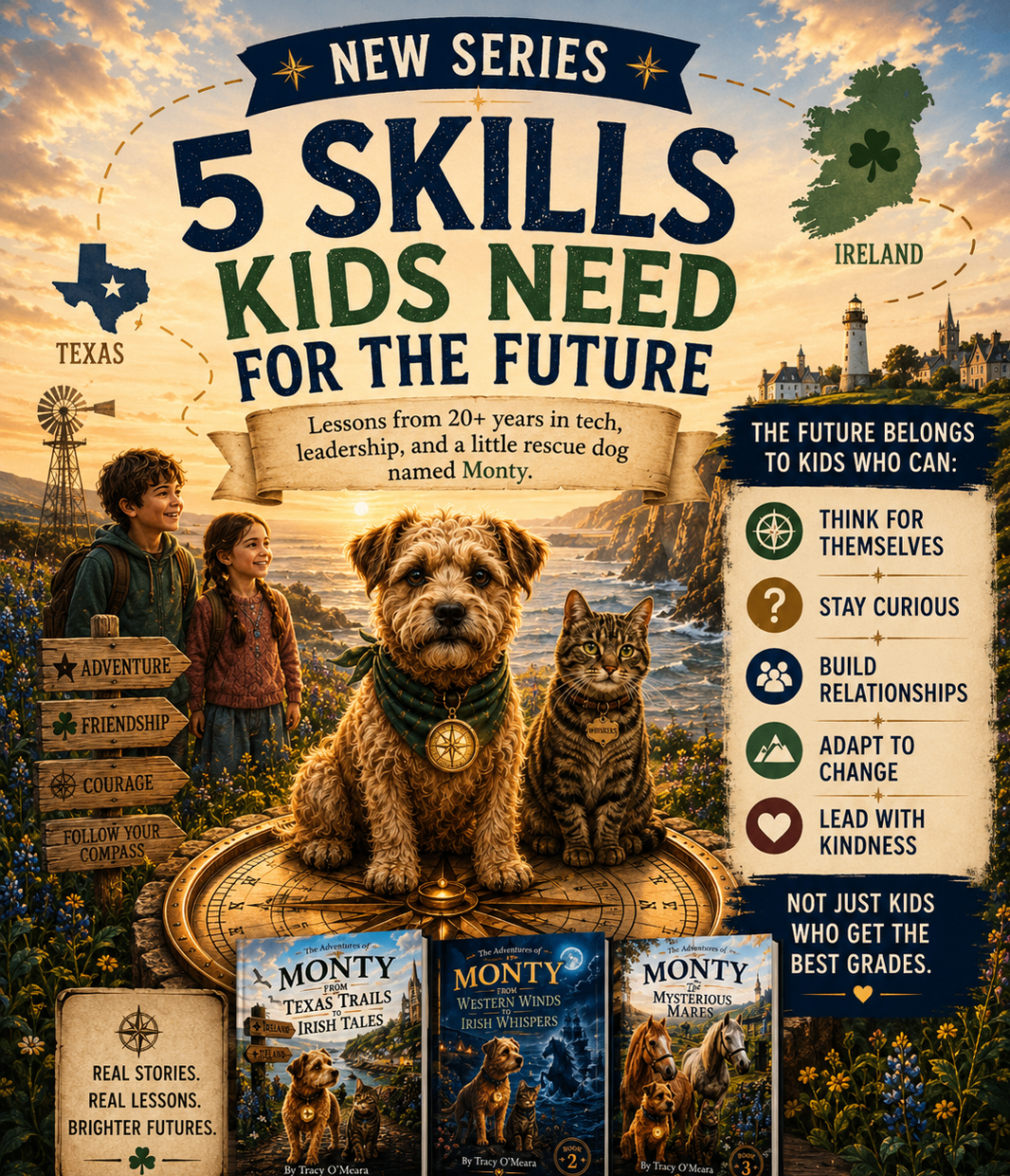
The 5 skills kids need for the future campaign artwork
Preparing children for the future

Five skills children need when the world changes fast.

From the inside of three global tech companies

Tracy spent over 25 years working for large multinationals, watching roles appear, disappear, and reshape themselves at extraordinary speed. AI is accelerating that change again. These are five life skills that come from experience, belief, trust, and the courage to keep going. They are the human strengths she believes children need most to thrive in the world they are growing into.

"AI gives answers. Curious children learn which questions to ask."
— Future-readiness theme from Tracy's series

How Monty's world supports these skills

Monty's adventures offer a gentle way to talk about big modern questions. A child can discuss truth, friendship, courage, and change through story first — and then carry those lessons into school, online life, and everyday decisions.

  • Curiosity grows when children notice details, follow clues, and keep asking why.
  • Independent thinking grows when they compare perspectives and test ideas against what they know to be true.
  • Relationships grow when they see how trust, listening, and teamwork move the story forward.
  • Adaptability grows when characters meet uncertainty without giving up.
  • Kindness grows when children see strength expressed through compassion, not just confidence.
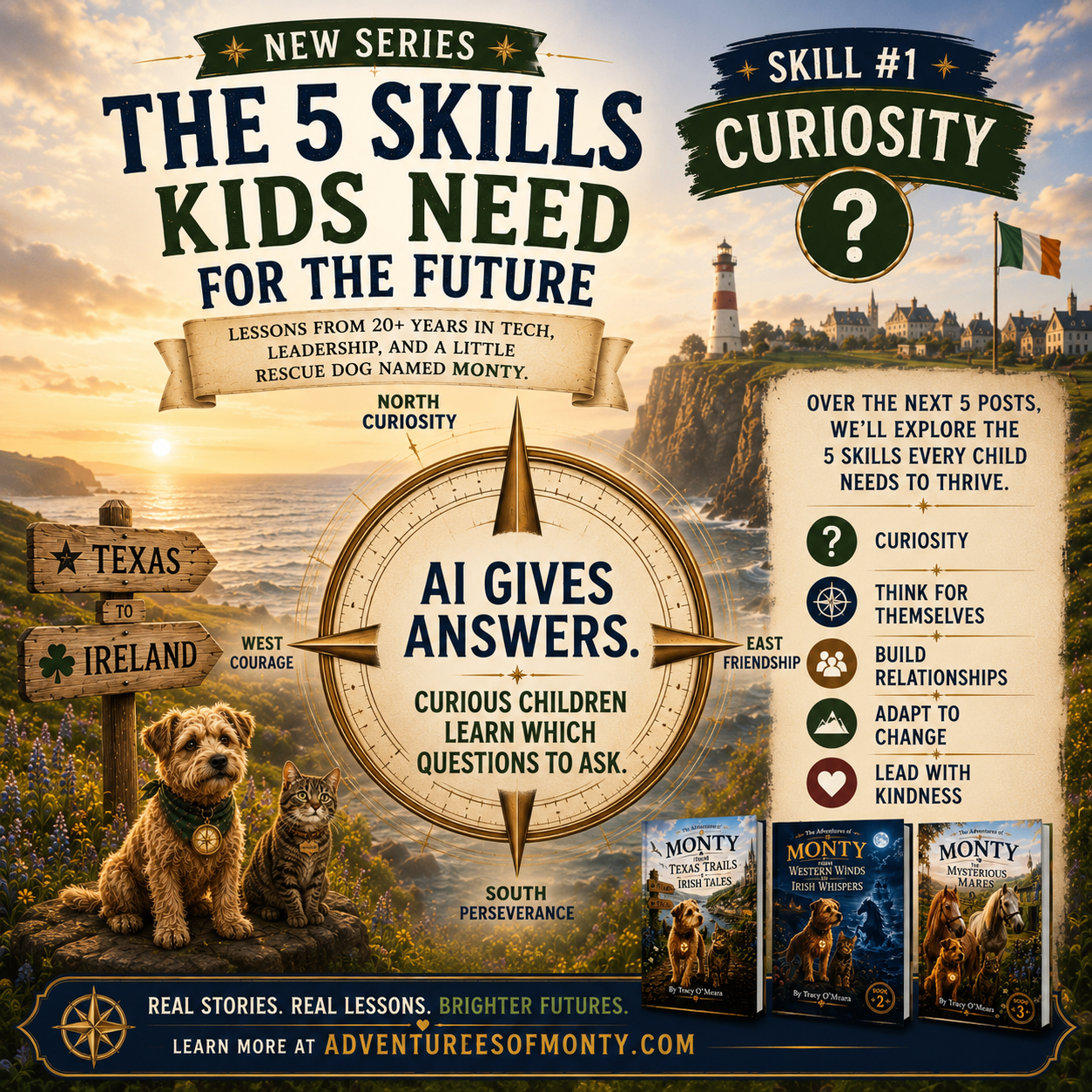
Spotlight on Skill 01 · Curiosity

Try the 5 Whys with your child

The "5 Whys" is a simple thinking tool used everywhere from engineering teams to classrooms. You ask why something is happening, then ask why again to the answer you get — and again, up to five times. The first answer is rarely the real one.

It teaches children to slow down, understand a problem before jumping to a solution, and notice what the data is actually telling them.

Example · "I don't like maths"

  1. Why 1. Because it's hard. → But hard isn't the real reason.
  2. Why 2. Because I get the answers wrong. → Getting closer.
  3. Why 3. Because I forget the steps. → Now we have data.
  4. Why 4. Because I rush. → A pattern appears.
  5. Why 5. Because I'm worried about finishing last. → The real problem.

Why this matters

  • Understand the problem. Don't settle for the first answer — keep going until something honest appears.
  • Use the data. Each "why" is a piece of evidence. Look at the pattern, not just one moment.
  • Think ahead. Once you know the real cause, you can predict what to try next time — instead of reacting to the same problem again.
01

Curiosity

AI can produce quick answers, but children still need the habit of wondering, probing, and asking better questions — not settling for the first one.

Curious children learn to understand a problem before trying to fix it. They look at the data, ask why more than once, and start to think ahead instead of just reacting.

Try asking

  • Why do you think that happened? And why behind that?
  • What information would help us understand this better?
  • If we did this, what might happen next?
02

Thinking for themselves

Children need to weigh information, compare viewpoints, and decide what they believe — not simply repeat what a tool tells them.

Critical thinking helps children spot manipulation, question easy answers, and develop confidence in their own judgement.

Try asking

  • How do we know this is accurate?
  • What evidence would help us decide?
03

Building relationships

The future will still belong to children who can listen well, work with others, and make people feel seen.

Technology can connect devices, but children still need friendship, empathy, and communication to build strong communities.

Try asking

  • What does a good teammate do when someone feels left out?
  • How can we disagree kindly and still stay connected?
04

Adapting to change

Children are growing up in a world that changes quickly. They need practice with flexibility, recovery, and trying again.

Adaptability helps children meet new situations with steadiness instead of fear, whether the change is social, academic, or technological.

Try asking

  • What could you try next if your first plan doesn't work?
  • What new path might still lead somewhere good?
05

Leading with kindness

As children gain more tools and information, kindness matters even more. Character determines how knowledge gets used.

Kindness turns intelligence into wisdom. It helps children use their voice, ideas, and influence in ways that lift other people up.

Try asking

  • What would the kind choice look like here?
  • How can strong words also be gentle words?

The campaign · scroll through all five

Curiosity campaign artwork from The 5 Skills Kids Need for the Future series

Skill 1 — Curiosity

Questions, wonder, and the courage to keep exploring.

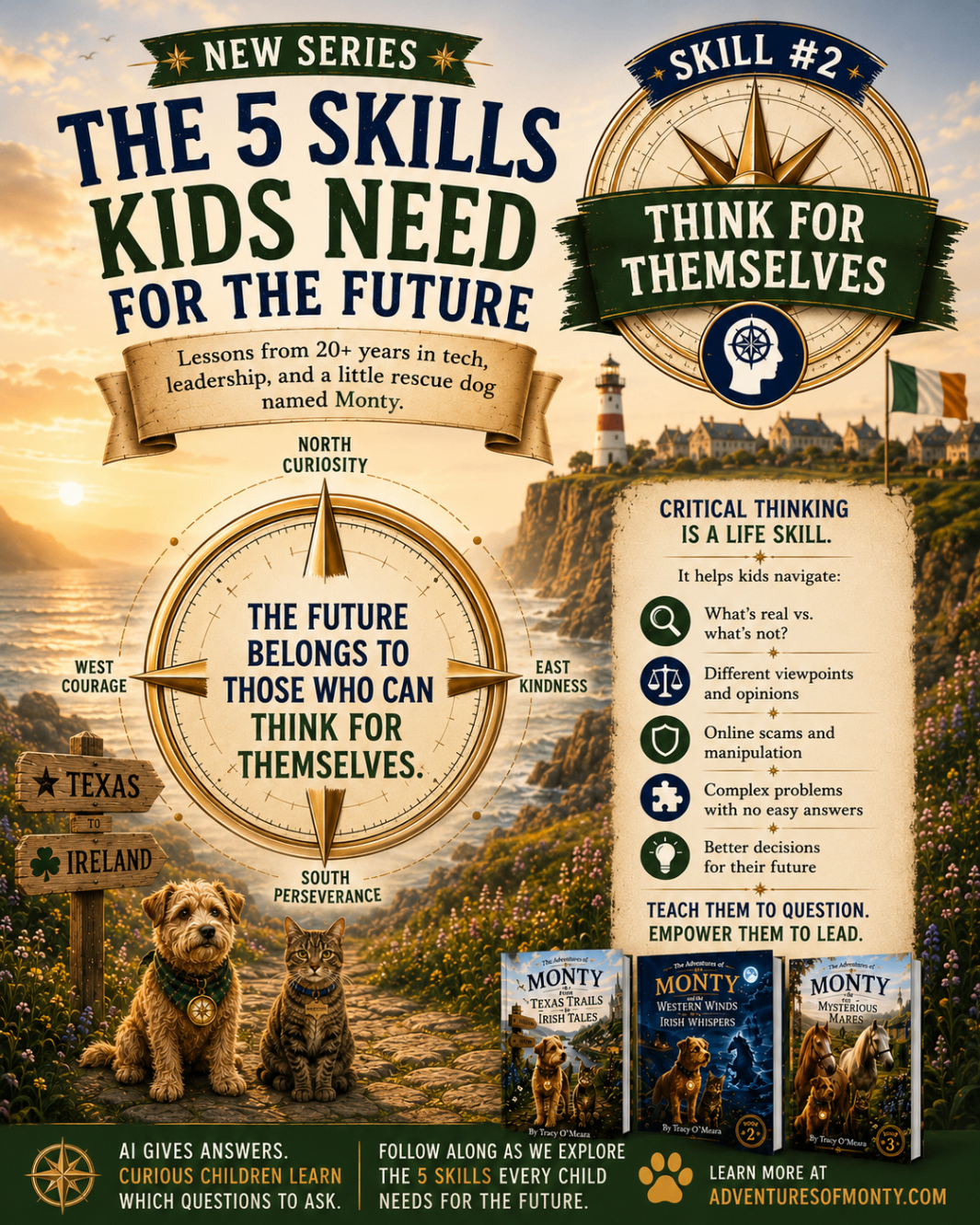
Think for themselves campaign artwork from The 5 Skills Kids Need for the Future series

Skill 2 — Think for themselves

Critical thinking, perspective, and better judgement.

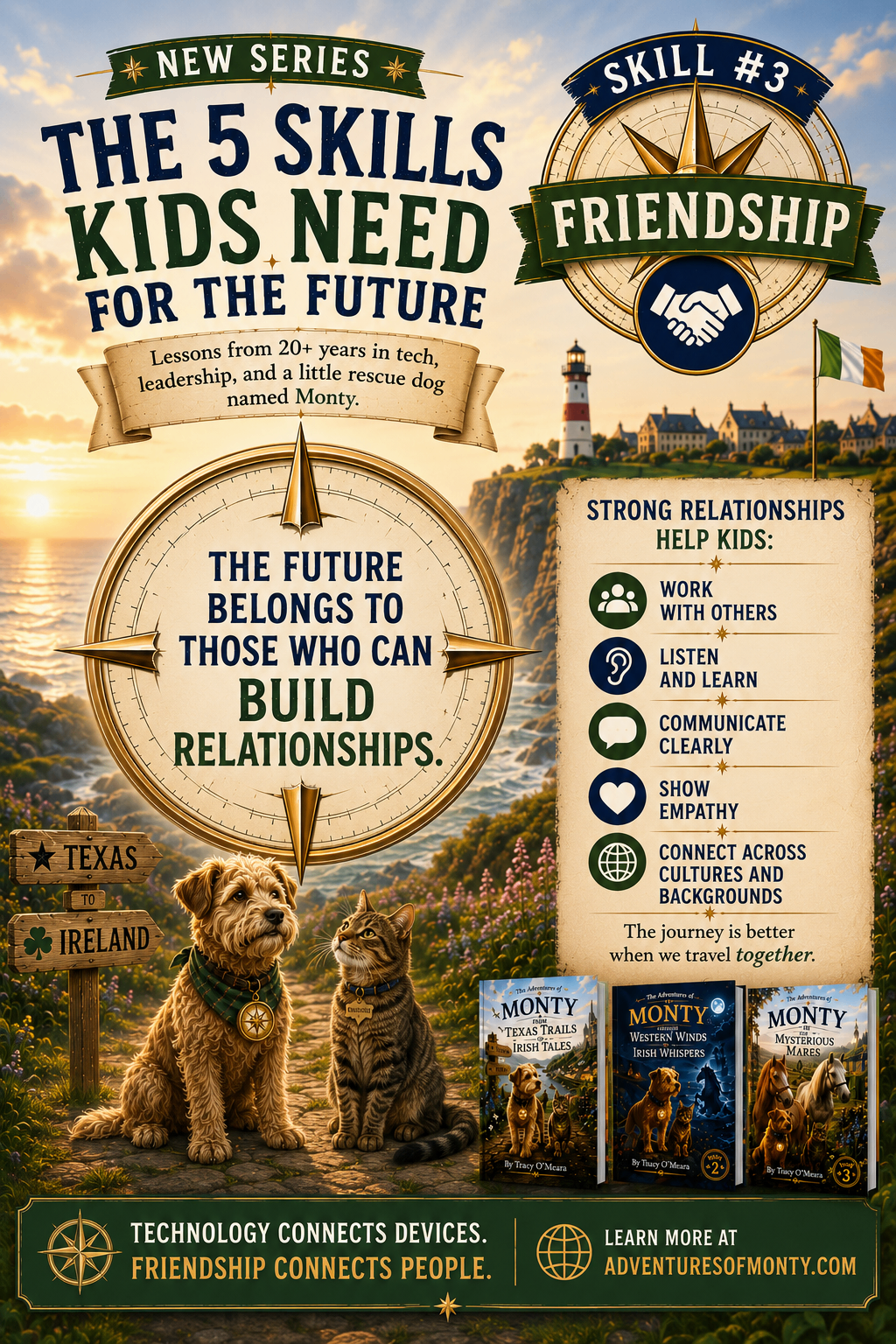
Friendship campaign artwork from The 5 Skills Kids Need for the Future series

Skill 3 — Friendship

Relationships, empathy, and communicating across differences.

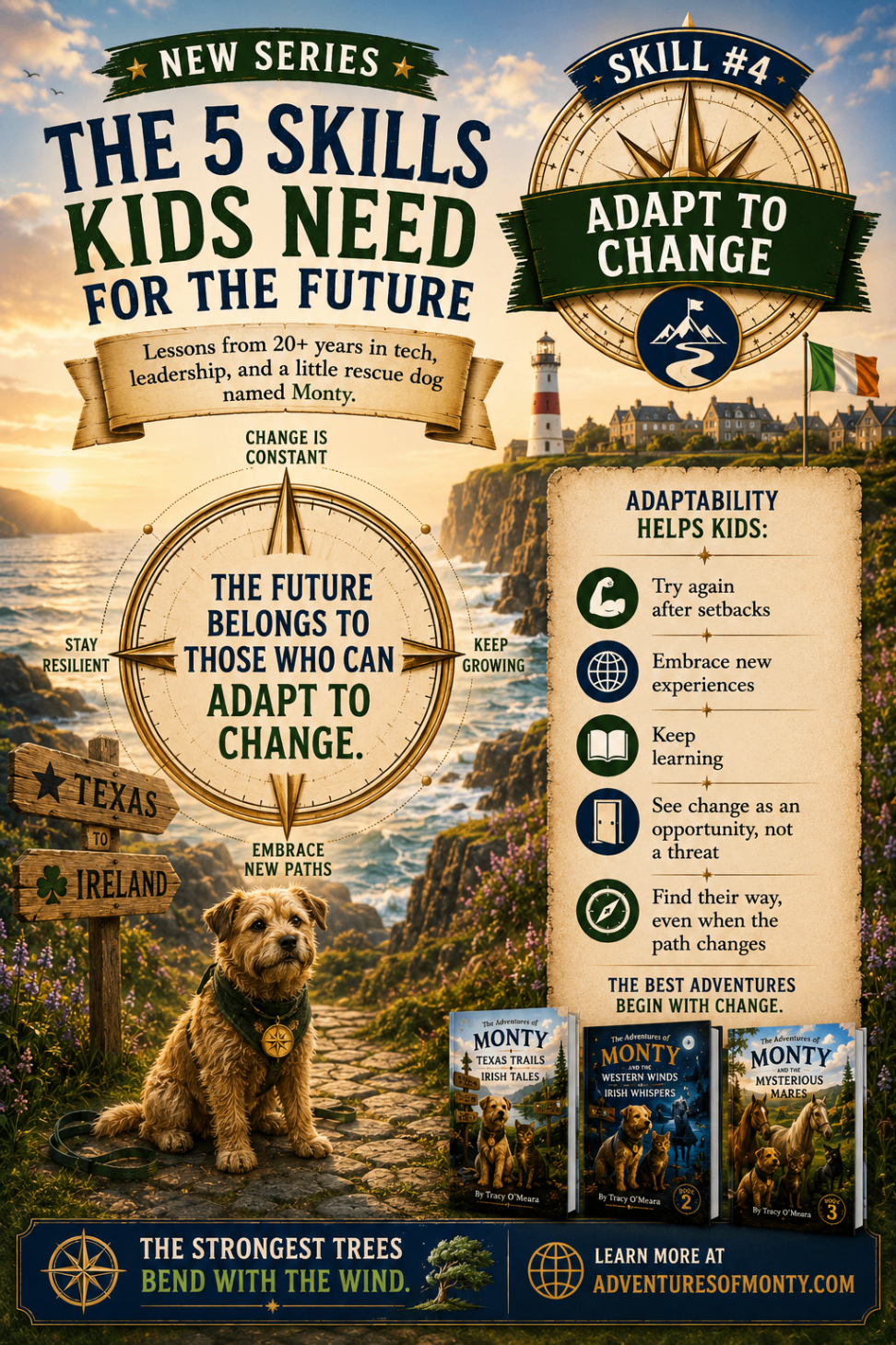
Adapt to change campaign artwork from The 5 Skills Kids Need for the Future series

Skill 4 — Adapt to change

Resilience, new paths, and growing through change.

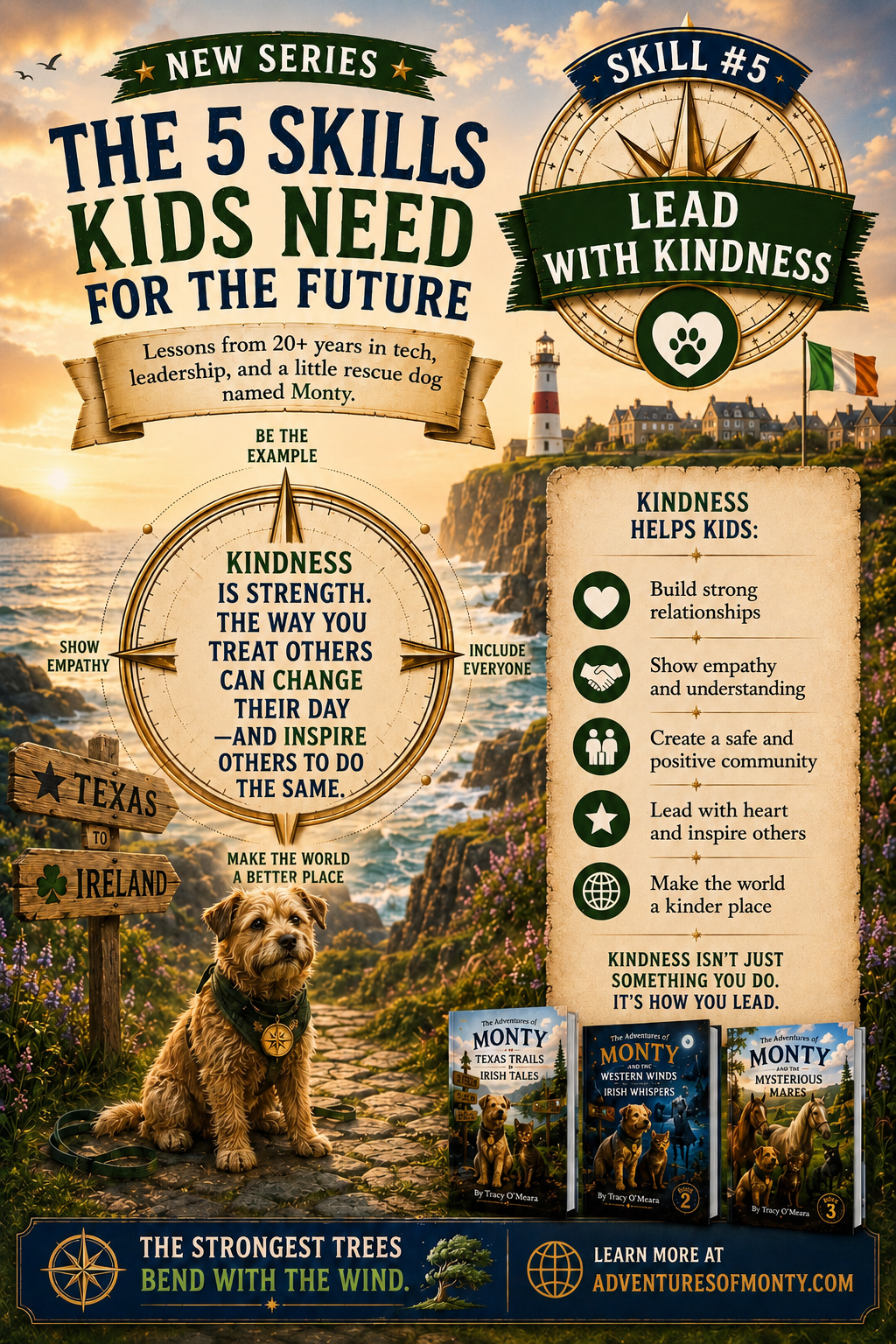
Lead with kindness campaign artwork from The 5 Skills Kids Need for the Future series

Skill 5 — Lead with kindness

Kindness as strength — the way you treat others can change their day.

Curiosity campaign artwork from The 5 Skills Kids Need for the Future series

Skill 1 — Curiosity

Questions, wonder, and the courage to keep exploring.

Think for themselves campaign artwork from The 5 Skills Kids Need for the Future series

Skill 2 — Think for themselves

Critical thinking, perspective, and better judgement.

Friendship campaign artwork from The 5 Skills Kids Need for the Future series

Skill 3 — Friendship

Relationships, empathy, and communicating across differences.

Adapt to change campaign artwork from The 5 Skills Kids Need for the Future series

Skill 4 — Adapt to change

Resilience, new paths, and growing through change.

Lead with kindness campaign artwork from The 5 Skills Kids Need for the Future series

Skill 5 — Lead with kindness

Kindness as strength — the way you treat others can change their day.

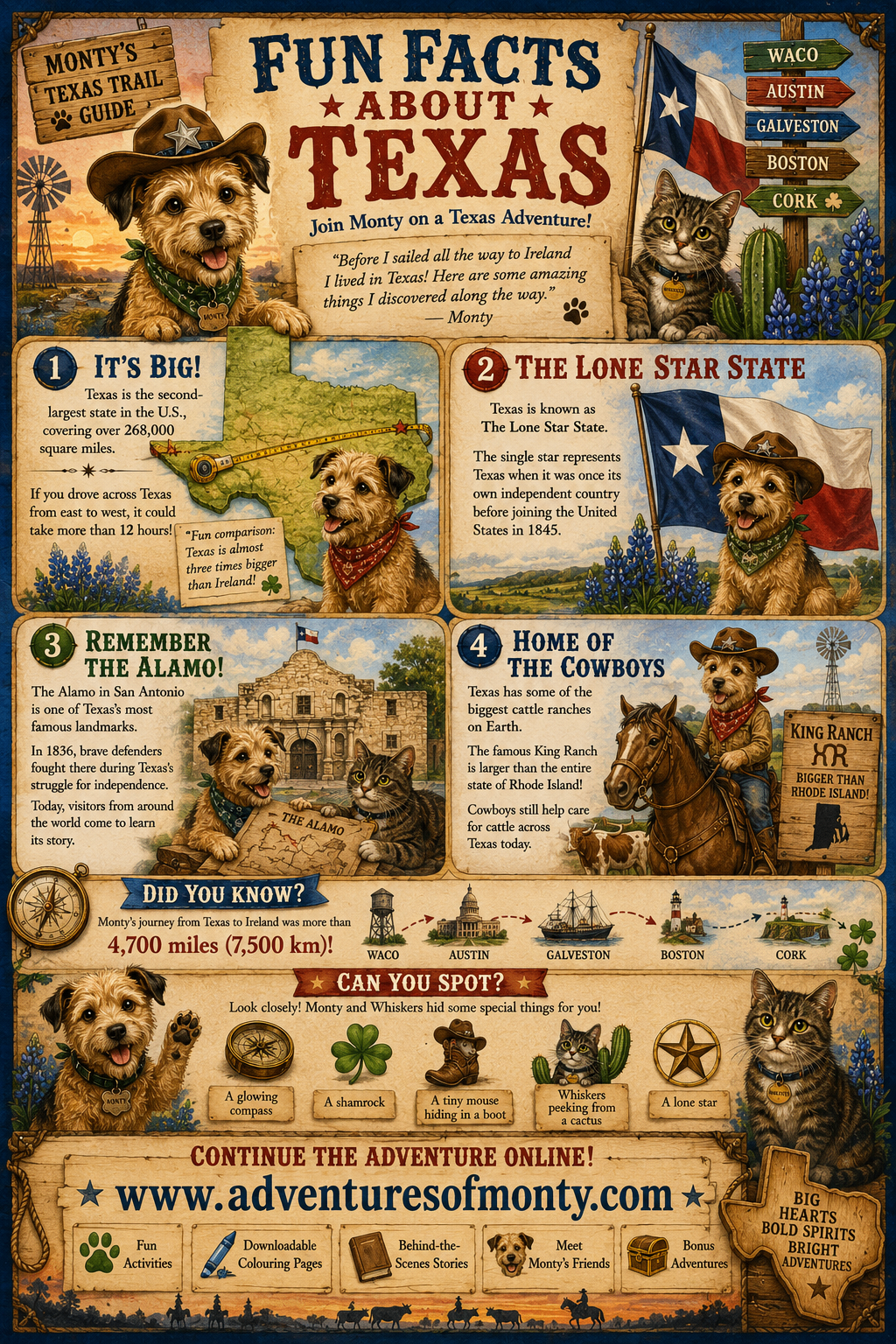
Fun Facts About Texas — Lone Star State, the Alamo and King Ranch
Texas · Lone Star State, the Alamo and the King Ranch.
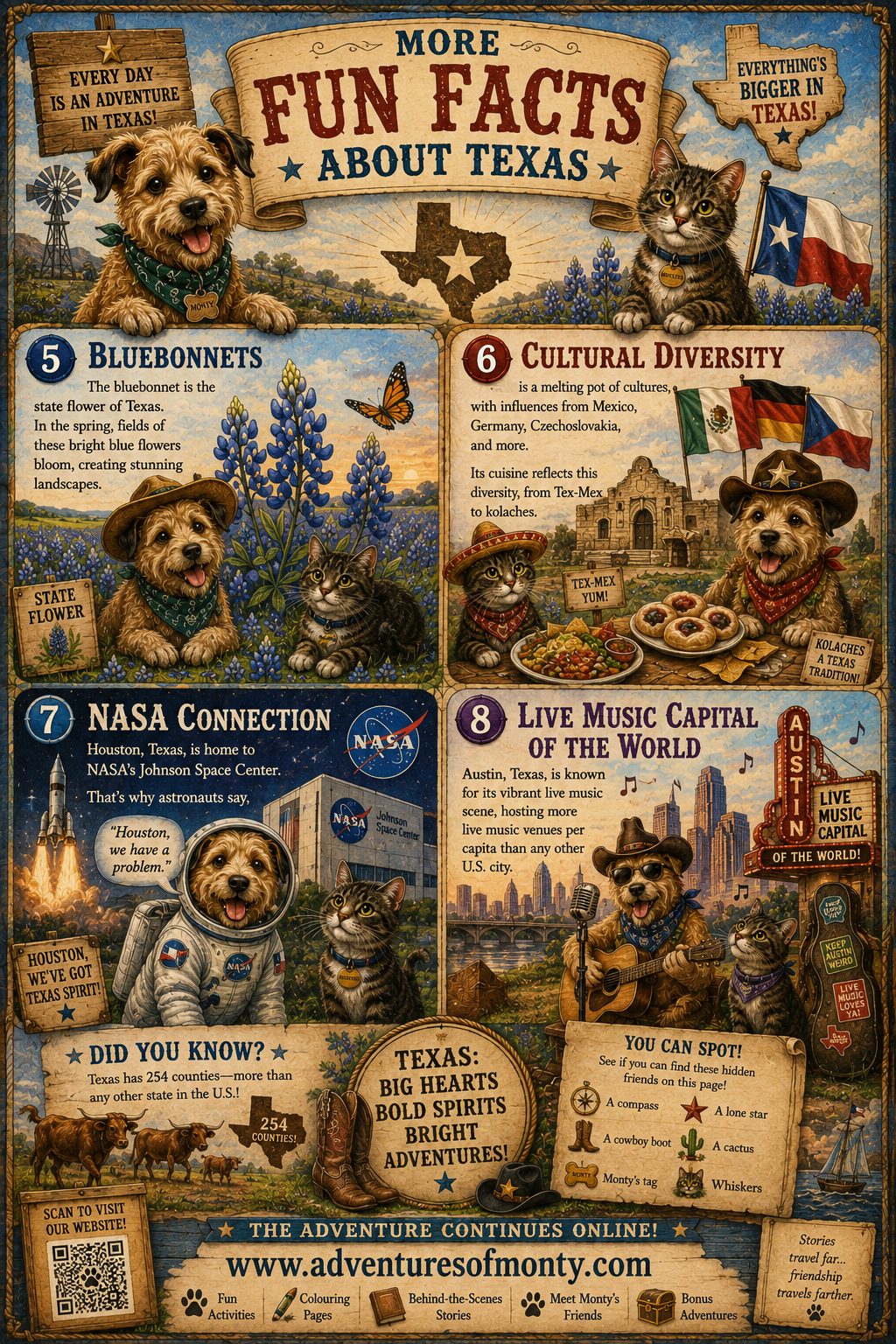
More Fun Facts About Texas — bluebonnets, cultural diversity, NASA and Austin music
Texas · bluebonnets, Tex-Mex, NASA and the live music capital.
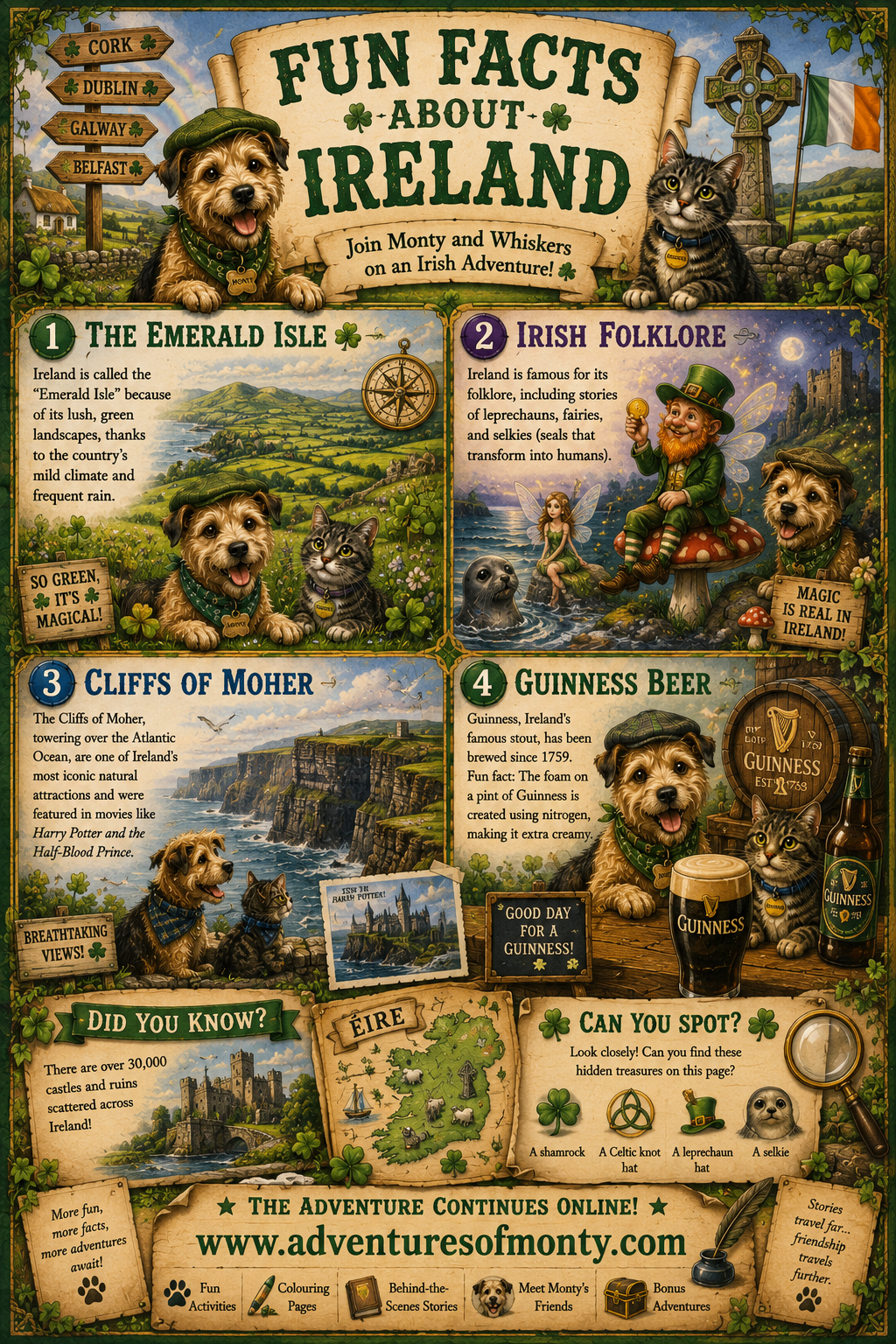
Fun Facts About Ireland — the Emerald Isle, folklore, Cliffs of Moher and Guinness
Ireland · the Emerald Isle, folklore, Cliffs of Moher and Guinness.
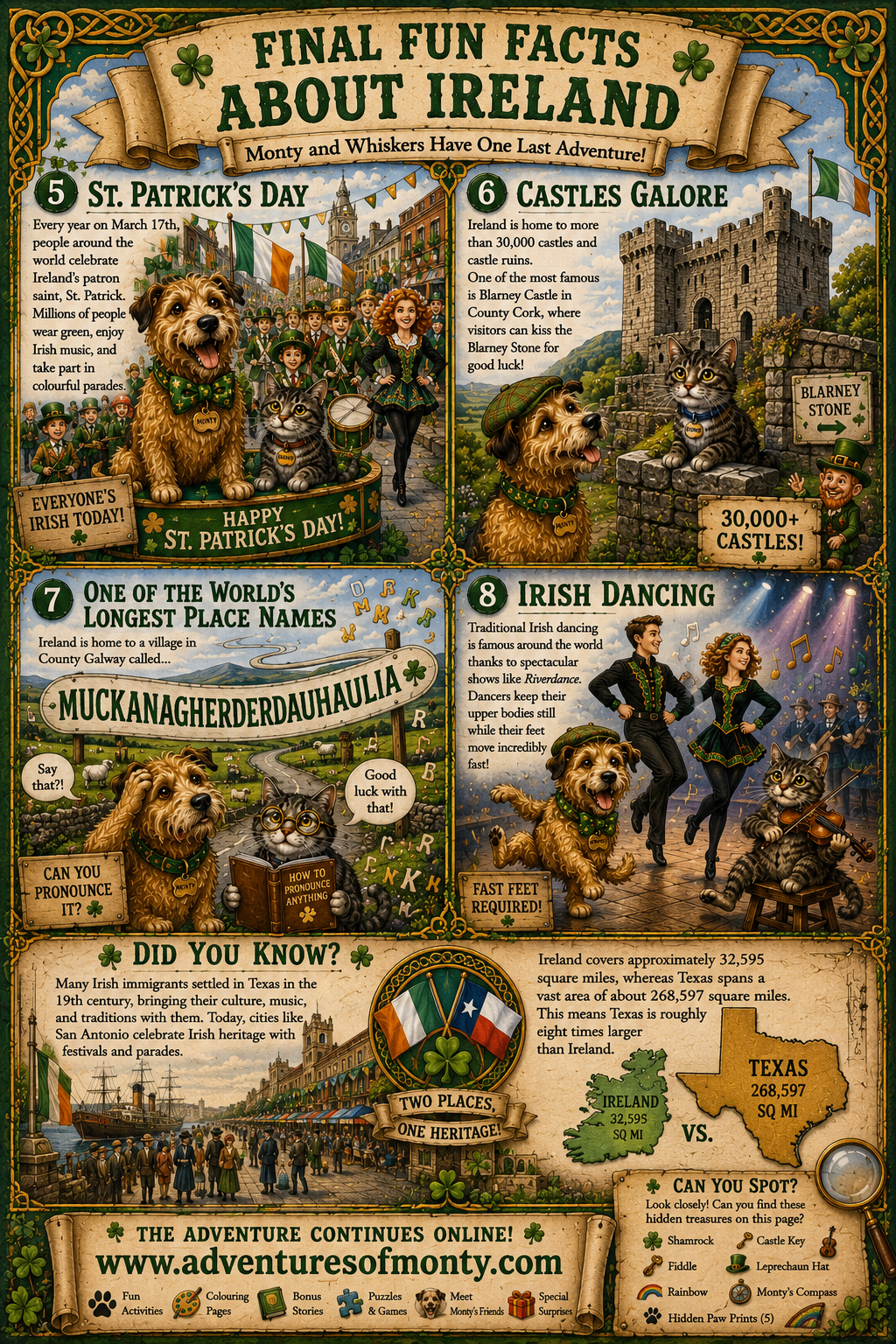
Final Fun Facts About Ireland — St. Patrick's Day, castles, place names and Irish dancing
Ireland · St. Patrick's Day, 30,000 castles and Irish dancing.
"Different doesn't mean strange. It just means new."
From Texas Trails to Irish Tales

Monty travels from Waco, Texas to Cork, Ireland — two very different worlds with surprising connections. Use the contrast to open conversations about history, language, accents, food, music and the values that shape how each place feels.

Topic
Texas
Ireland
Nickname
The Lone Star State
The Emerald Isle
Size
≈ 268,597 sq mi
≈ 32,595 sq mi
Greeting
"Howdy, y'all!"
"Hi, how's it goin'?"
Famous food
BBQ, Tex-Mex, kolaches
Irish stew, soda bread
Iconic landmark
The Alamo, San Antonio
Cliffs of Moher, Blarney Castle
A bit of magic
Cowboy legends & lone stars
Leprechauns, fairies, selkies

Talking Points

  • Size and landscape: Texas is roughly eight times bigger than Ireland — plains, ranches and bluebonnets versus green hills, cliffs and stone cottages.
  • History: Texas was once an independent country (the Lone Star State, 1836–1845). Ireland has castles, Celtic crosses and stories that go back over a thousand years.
  • Accents and language: a Texan drawl ('y'all, howdy, fixin' to') and an Irish lilt ('grand, craic, what's the story?'). Ireland also has its own language — Gaeilge (Irish).
  • Food and drink: Tex-Mex, BBQ, kolaches and sweet tea in Texas; Irish stew, soda bread, Tayto crisps and a creamy pint of Guinness for the grown-ups.
  • Music and dance: country and live music in Austin ('Live Music Capital of the World') versus traditional Irish music, fiddles and the fast feet of Irish dancing.
  • Folklore: cowboys, longhorns and Alamo legends meet leprechauns, fairies, selkies and the Blarney Stone.
  • Shared heritage: many Irish immigrants settled in Texas in the 19th century — cities like San Antonio still celebrate Irish music and parades today. Two places, one heritage.

Suggested Activities

  • Draw your own home and a friend's home — what's the same, what's different?Home + Class
  • Find Ireland and Texas on a world map and measure the distance between them.Classroom
  • Write a letter as Monty to his friends back in Texas, describing what surprised him most.Home + Class
  • Make a mini phrasebook: list five Texan sayings and five Irish sayings, then teach them to a friend.Home + Class
  • Cook (or design a menu for) one Texan dish and one Irish dish for a 'Two Places, One Heritage' lunch.Home
  • Listen to one country song and one traditional Irish tune — how does each one make you feel?Classroom

The Compass & Your Child

An inner compass, gently nurtured.

Monty's brass compass doesn't just point north — it points inward. Researchers in child development talk about something called an inner compass: the set of qualities that help a child grow into who they're meant to be. Curiosity. Empathy. Resilience. Creativity. Every adventure Monty goes on puts those qualities to the test.

Clinicians describe the inner compass as personal integrity — the steady alignment of values, choices and actions that protects long-term mental health. As The London Practice puts it, following your inner compass builds self-trust, resilience and authentic relationships, and helps children grow up grounded in who they are.

"You don't need brass and leather to carry a compass. Everyone has one."
— Tracy, author

Curiosity

Monty follows his nose across an ocean. What made you curious enough to follow something new?

Empathy

Whiskers is wary at first. How does Monty show he can be trusted?

Resilience

Monty gets lost and scared. What helps him keep going?

Self-awareness

The compass glows when the path matters. When have you felt that pull inside?

Sociability

A stray finds a whole new circle of friends. How do we welcome someone new?

Integrity

Joe could have kept Monty hidden. Why does honesty matter, even when it's hard?

Resourcefulness

A brass tag, a kind conductor, a sleeping car. What small things helped Monty most?

Creativity

Imagine the next place the compass might lead Monty. Draw it.

7 ways to help your child's inner compass grow

Small habits, gathered from child-development research and woven into Monty's world. Read aloud, follow with a question, and let the conversation wander.

  • Notice when your child feels stretched — and stay close while they figure it out.
  • Make space for small risks: a new food, a new friend, a new chapter alone.
  • Ask one open question after reading: 'What would you have done?'
  • Let curiosity lead the day, even if it takes the long way round.
  • Name the feelings you see — kindness, courage, frustration, pride.
  • Share your own compass moments: when you got it right, when you didn't.
  • Read together, often. Stories give children the words for their inner world.

A printable version is coming soon to the Resource Library.

Resource Library

Printables, guides & worksheets.

A growing library of downloads designed to slot straight into your lessons or rainy-afternoon plans. New resources are added with each volume.

Curriculum Guide PDF

Full lesson plan aligned to primary literacy, geography, and SPHE/PSHE goals.

Coming soon

Printable Adventure Map

A double-sided map of Ireland and Texas with all the key locations from the series.

Coming soon

Monty & the Magic Compass — Colouring Page

A full A4 colouring sheet of Monty on a Texas ranch with his brass compass, plus a colouring challenge and hidden-star game.

Download PDF

Compass Values Worksheet

A fill-in-your-own compass for children to map their four guiding values.

Download PDF

Reading Journal Template

One journal per volume, with chapter-by-chapter prompts and reflections.

Coming soon

Geography Activity Sheet

Plot Monty's full Atlantic crossing on a blank world map.

Coming soon

Discussion Question Cards

A printable card set per volume — perfect for circle time or family dinners.

Coming soon
Stay in the loop

Want new resources as each volume releases?

Join the Adventure Club and we'll send printables, lesson ideas, and behind-the-scenes notes straight from Cork.

Now playingSirens Calling HomeA song from Monty's world
0:000:00